








Physiotherapist's recommendations
TENS Therapy for Pain Relief: How to Use It Safely and Effectively

Mar
Pain can interfere with walking, working, sleeping, exercising and everyday activities. Depending on the cause of the pain, treatment may include load modification, exercise, medication, physiotherapy or other approaches. One tool sometimes used for short-term symptom relief is TENS therapy.
TENS, or transcutaneous electrical nerve stimulation, is a non-invasive electrotherapy method. A small portable device sends weak electrical impulses through electrodes placed on the skin, creating a tingling sensation that can temporarily reduce pain intensity in some people.
TENS does not treat every type of pain or address its underlying cause. It can be used as an addition to a treatment plan rather than as a replacement for medical assessment, movement, exercise or treatment prescribed by a healthcare professional. TENS does not help everyone, so its effectiveness should be judged according to your individual response.
Various TENS and electrostimulation devices are available for home use, but the appropriate model should be selected according to the required function rather than simply the number of programmes.
What is TENS?
TENS stands for transcutaneous electrical nerve stimulation.
A TENS device usually includes:
- one or two independent channels;
- lead wires;
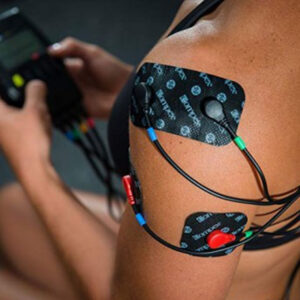
- two or four electrodes;
- adjustable stimulation intensity;
- several preset programmes;
- a timer or treatment-duration setting.
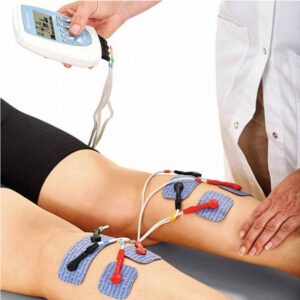
The electrodes are placed on the skin near the painful area. When the device is switched on, you will usually feel a steady, pulsating or changing tingling sensation. During an appropriately selected TENS programme, the sensation should be strong but comfortable and should not be painful.
How can TENS affect pain?
The effect of TENS on pain cannot be explained by one mechanism alone. Electrical stimulation activates sensory nerve fibres and may influence the processing of pain signals in both the peripheral and central nervous systems.
TENS is thought to be able to:
- temporarily reduce the transmission of pain signals;
- activate the body’s natural pain-inhibiting mechanisms;
- change the amount of attention directed towards the painful area;
- help some people move or perform exercises more comfortably.
In simple terms, this is sometimes explained using the “pain gate” principle: strong but non-painful sensory stimulation may reduce how intensely the nervous system perceives pain at that particular moment. However, TENS does not change damaged tissue and does not itself treat an injury, osteoarthritis, nerve damage or another underlying diagnosis.
Is the effectiveness of TENS scientifically proven?
Research findings on TENS have been inconsistent for many years. One reason is the considerable variation between studies: different devices, programmes, intensities, electrode positions and treatment durations have been used. In some studies, the stimulation may also have been too weak to produce a meaningful effect.
The large 2022 meta-TENS systematic review included 381 randomised trials involving more than 24,000 participants. The analysis found that strong but non-painful TENS reduced pain intensity during treatment or immediately afterwards more than placebo. The certainty of evidence compared with placebo was rated as moderate, although the longer-term effects on function, quality of life and medication use remain less clear.
At the same time, TENS should not be presented as a universally effective treatment. For example, NICE guidelines currently do not recommend routine use of TENS for non-specific lower-back pain, sciatica or osteoarthritis because studies of these specific conditions have not produced sufficiently convincing evidence of consistent clinical benefit.
In practice, TENS can therefore be considered a symptom-management option worth trying:
- if there are no contraindications;
- if the cause of the pain is known or has been professionally assessed;
- if TENS makes movement or rehabilitation exercises easier;
- if it is not used instead of other necessary treatment;
- if a reasonable trial produces a noticeable benefit.
What types of pain can TENS be tried for?
TENS is used for the symptomatic management of various acute and persistent pain conditions. It is also sometimes used for short-term symptom control in knee osteoarthritis, although it does not replace exercise, load modification or other treatments.
TENS may be tried for:
- muscle and joint pain;
- pain following sports or everyday injuries;
- period pain;
- some types of chronic pain;
- post-operative pain when approved by the treating healthcare professional;
- certain types of nerve-related pain.
This does not mean that TENS will be equally effective in every situation. The quality and results of research vary between diagnoses, while some people subjectively experience useful short-term relief. If pain is of unknown origin, has appeared for the first time without an obvious reason, is rapidly worsening or is accompanied by other symptoms, consult a doctor or physiotherapist before using TENS.
TENS and EMS or NMES are not the same thing
Electrostimulation devices can offer several different forms of electrical stimulation. TENS and EMS or NMES are among the modes most commonly confused with one another.
TENS
The main purpose of TENS is short-term pain relief. Stimulation primarily targets sensory nerves, so you would normally feel a strong tingling sensation without needing a visible muscle contraction.
EMS or NMES
EMS, or electrical muscle stimulation, and NMES, or neuromuscular electrical stimulation, are used to produce a muscle contraction. They can be used for muscle activation, restoration of strength or neuromuscular re-education in specific rehabilitation situations.
A TENS programme is not designed to strengthen muscles. Conversely, an EMS or NMES programme may not be appropriate for pain relief. When using a combined device, always select the mode that corresponds to your goal.
How to use a TENS machine correctly
The instructions supplied with your specific device should always be the primary source of information. Different devices may have different controls, programme names, electrode types and permitted treatment durations.
1. Check whether TENS is suitable for you
Before your first treatment, read the device instructions and make sure that none of the listed contraindications apply to you.
If you are using TENS for the first time, do not know the cause of your pain or have significant health conditions, it is safer to consult a doctor or physiotherapist first.
2. Prepare the skin
The skin should be:
- clean;
- dry;
- free from creams or oils;
- free from open wounds;
- free from significant irritation.
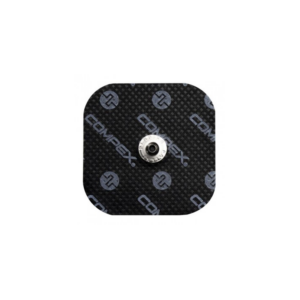
Very dense body hair can interfere with electrode adhesion. Usually, trimming the hair is sufficient rather than shaving the skin immediately before treatment, as shaving can cause minor skin irritation. If self-adhesive electrodes have dried out, are damaged or no longer adhere evenly, they should be replaced. View the available TENS and EMS electrodes.
3. Connect the electrodes while the device is switched off
First connect the lead wires to the device and electrodes. Only then place the electrodes on the skin and switch the machine on.
The electrodes should not overlap. Leave a gap between them; hospital patient guidance commonly recommends at least approximately 2 cm.
4. Position the electrodes near the painful area
The electrodes can be positioned:
- above and below the painful area;
- on either side of the painful area;
- around a larger painful region;
- along the direction of a nerve or muscle if recommended by a healthcare professional.
The electrode does not necessarily need to be placed directly on the most painful point. Sometimes a more comfortable and even stimulation can be achieved by positioning the electrodes around the painful area.
5. Select a TENS programme
If your device has several functions, make sure that you have selected a TENS or pain-relief programme rather than a muscle-strengthening, endurance or recovery programme.
Initially, you can use one of the manufacturer’s preset programmes. There is no need to independently change frequency or pulse duration if you do not understand what these parameters mean.
6. Increase the intensity gradually
Slowly increase the intensity until you feel:
- a clearly noticeable tingling sensation;
- a strong but comfortable sensation;
- stimulation that is not burning or painful.
Stimulation that is extremely weak and barely noticeable may be less effective. Excessive intensity, on the other hand, increases the risk of discomfort and skin irritation.
During the treatment, the nervous system may adapt to the sensation and the tingling can become weaker. If this happens, the intensity can be increased slightly while maintaining a strong but comfortable sensation. More recent research suggests that adequate intensity, adjusted during treatment when necessary, is one of the important factors influencing TENS effectiveness.
7. Check the skin after treatment
Switch the device off before removing the electrodes. Remove the electrodes slowly and do not pull them off by the lead wire.
Mild temporary redness underneath an electrode can occur, but it should gradually decrease. Stop treatment if you develop:
- itching;
- burning;
- a rash;
- blisters;
- pronounced or persistent redness.
Do not place the electrodes on the same area again until the skin has recovered.
How long should TENS be used?
There is no single treatment duration that is appropriate for every person, diagnosis and TENS device.
As a practical starting point, a treatment of approximately 30–60 minutes can be used while assessing:
- whether pain intensity decreases;
- whether treatment remains comfortable;
- how long any benefit lasts;
- how the skin responds.
In some situations, TENS can be used for longer periods or several times per day if permitted by the instructions for the specific device and the skin is checked regularly. There is no universal rule stating that every TENS device may only be used for 10–25 minutes or no more than three times per day.
If longer sessions are used:
- check the skin regularly;
- vary the electrode position;
- do not leave the device switched on while sleeping;
- do not exceed the duration recommended by the manufacturer;
- stop the treatment if discomfort develops.
Should TENS intensity cause a muscle contraction?
With a conventional TENS pain-relief programme, the main goal is strong sensory stimulation. A visible muscle contraction is usually not necessary.
If the muscle begins to twitch noticeably:
- check that you have selected TENS rather than an EMS or NMES programme;
- reduce the intensity slightly;
- check the electrode placement;
- make sure that the electrodes are not positioned too close to a motor nerve point.
Some low-frequency TENS programmes may produce mild muscle activity, but this should not be painful or cause sudden joint movement.
Where should TENS electrodes not be placed?
Do not place electrodes:
- on the front or side of the neck;
- on the eyes, eyelids or very close to the eyes;
- inside the mouth;
- on damaged, inflamed or infected skin;
- over an area with significantly reduced sensation;
- in a configuration that causes the electrical current to pass across the chest;
- on the chest and back at the same time;
- on the genitals;
- directly over a recent surgical wound;
- where an electrode would interfere with a medicated patch.
Do not use TENS in the bath or shower, while driving, while operating machinery or while sleeping.
TENS contraindications and precautions
Do not start using TENS without the approval of a doctor or another appropriate healthcare professional if:
- you have an implanted pacemaker or another electronic medical device;
- you have epilepsy;
- you are pregnant;
- you have a heart rhythm disorder;
- you have significant sensory impairment;
- you are unable to safely operate the device yourself or communicate what you are feeling;
- the cause of your pain is unknown;
- TENS is intended for use by a child.
During pregnancy, TENS may be used in certain circumstances, such as labour pain, under professional guidance. This does not mean that electrodes should be independently placed over the abdomen, back or pelvic area during pregnancy.
If you have an implanted pacemaker or another electronic implant, safety cannot be determined simply from the location of the electrodes. Approval from the treating doctor or specialist responsible for the implanted device is required.
Can TENS cause side effects?
TENS is generally considered a low-risk intervention when used according to the instructions. The large meta-TENS review did not identify serious adverse events directly related to TENS, although reporting of adverse events was not complete in every study.
More common possible problems include:
- skin redness;
- itching;
- contact allergy to electrode adhesive;
- a burning sensation;
- discomfort caused by excessive intensity;
- skin damage from incorrect or excessively prolonged use.
The risk of skin irritation or a burning sensation is greater when electrodes are damaged, dried out, positioned too close together, do not adhere properly or when the stimulation intensity is excessive.
Do you need electrostimulation gel under TENS electrodes?
Modern TENS devices frequently use self-adhesive electrodes with a conductive gel layer already incorporated into the pad. Additional gel is generally not required under these electrodes unless stated otherwise in the manufacturer’s instructions.
Separate electrostimulation gel may be required for:
- reusable rubber or silicone electrodes;
- electrodes designed to be used with a conductive medium;
- specific professional electrostimulation systems;
- situations where the manufacturer explicitly requires it.
Applying additional gel underneath a self-adhesive electrode that is not designed for it can reduce adhesion and shorten the usable life of the electrode.
How to care for TENS electrodes
To help electrodes last longer:
- apply them only to clean, dry skin;
- after treatment, place them back onto their protective film;
- store them in a closed package;
- avoid touching the gel surface more than necessary;
- do not remove an electrode by pulling on the wire;
- do not use an electrode that no longer adheres evenly;
- follow the manufacturer’s storage instructions.
A worn electrode can produce uneven or sharp stimulation. If you feel a stinging or burning sensation in one area, check the electrode contact and condition.
How to choose a TENS machine
When selecting a device, whether it meets the intended purpose is more important than having a very large number of programmes.
Consider:
- whether the device has a genuine TENS programme;
- whether intensity can be adjusted gradually;
- whether it has one or two independent channels;
- how many electrodes can be used simultaneously;
- whether there is a treatment timer;
- whether the display and controls are easy to understand;
- how easily replacement electrodes can be obtained;
- whether the device has appropriate medical-device marking;
- whether clear instructions are supplied.
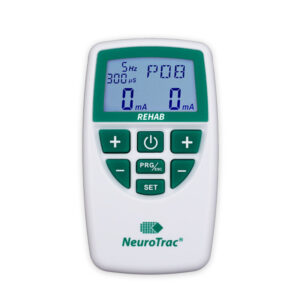
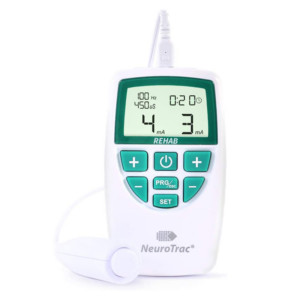
Both simple TENS units and combined electrostimulation systems are available, including various Compex and NeuroTrac models. Before purchasing, check the programmes available on the specific model. One device may provide both TENS and EMS, while another may primarily be designed for muscle stimulation.
A greater number of channels or programmes does not automatically provide better pain relief. For home use, safe and understandable controls, an adequate intensity range and appropriate electrodes are more important.
How can you tell whether TENS is helping?
Before treatment, rate your pain, for example on a scale from 0 to 10. Repeat the assessment during treatment, immediately afterwards and later.
Do not assess only the pain score. Consider function as well:
- Is it easier to stand up?
- Can you walk for longer?
- Are your exercises easier to perform?
- Has pain at rest decreased?
- Has sleep improved?
- How long does the effect last?
If several correctly performed trials produce no noticeable change, there is little reason to continue using TENS simply because the device has already been purchased. A different symptom-management or rehabilitation approach may be more appropriate for that particular type of pain.
When is TENS alone not enough?
TENS should not be used to delay necessary diagnosis or treatment.
Consult a doctor or physiotherapist if:
- the pain began after a significant injury;
- the pain is progressively worsening;
- the cause of the pain is unknown;
- marked swelling, redness or warmth develops;
- there is loss of muscle strength;
- numbness or changes in sensation develop;
- pain interferes with sleep or everyday activities;
- you increasingly need pain-relieving medication;
- symptoms do not improve over time.
Urgent medical assistance is required if pain is accompanied by shortness of breath, chest pain, altered consciousness, sudden weakness on one side of the body or other acute warning signs.
Is it better to use TENS before the pain becomes very severe?
It may be more practical to start using TENS when pain begins to increase rather than waiting until it becomes very severe. For some people, this can make it easier to continue moving, perform everyday activities or complete prescribed exercises. However, TENS should not be used preventively without a clear purpose simply because the device is available.
How quickly should pain relief occur after switching TENS on?
If TENS is helpful for a particular person, changes are usually noticed during the treatment or shortly afterwards. Large research reviews provide the strongest evidence for short-term effects during stimulation or immediately after treatment rather than prolonged elimination of pain.
Is it normal if pain decreases only while TENS is being used?
Yes. TENS is primarily a method of short-term symptom control, and in some people the benefit disappears soon after the device is switched off. This can still be useful if the temporary reduction in pain makes it easier to move or perform rehabilitation exercises.
Can TENS be used while walking or exercising?
A portable TENS machine can generally be used during light everyday activities if the electrodes and wires are securely positioned and the device does not interfere with movement control. Do not use TENS while driving, operating tools or machinery, showering, bathing or sleeping.
Can TENS be used together with pain medication?
TENS can be used as an additional method alongside pain medication recommended by a doctor or pharmacist. If TENS helps and you would like to reduce your medication, do not independently change the dose or frequency. Discuss this with your doctor or pharmacist.
Why does the TENS tingling sensation become weaker during treatment?
The nervous system may gradually adapt to the stimulation during treatment. If the tingling becomes barely noticeable, the intensity can be increased slightly while maintaining a strong but comfortable sensation. Do not increase the intensity to the point of pain, burning or uncontrolled muscle contraction.
What should you do if TENS does not reduce pain at all?
First check that the intensity is sufficiently strong, the electrodes adhere properly and a TENS rather than EMS programme has been selected. You can try slightly different electrode positioning or another TENS programme according to the instructions for the device. If several correctly performed attempts produce no noticeable difference, TENS may not be suitable for that particular type of pain – it does not help everyone.
Can long-term TENS use become less effective?
For some people, repeatedly using the same stimulation at an intensity that is too low may produce less benefit over time. In practice, it is important to maintain a clearly noticeable but non-painful intensity and adjust it during treatment if necessary. Programmes or frequencies should not be changed randomly if the user does not understand the meaning of the parameters.
Can TENS mask a serious health problem?
TENS may temporarily reduce the sensation of pain, but it does not establish a diagnosis or treat the underlying cause. It should not be used to delay medical assessment when pain is unexplained, rapidly worsening or accompanied by fever, marked swelling, numbness, muscle weakness or other unusual symptoms. The NHS recommends seeking professional advice before using TENS if the cause of the pain is not known.
Summary
TENS therapy can be a practical additional tool for short-term pain relief. Large research reviews suggest that sufficiently strong but comfortable stimulation can reduce pain intensity during treatment or immediately afterwards. However, benefit is not guaranteed, may be short-lived and guidelines for some individual diagnoses do not recommend routine use of TENS.
The most important principles for safe use are:
- understand the cause of the pain;
- select TENS rather than an unrelated EMS programme;
- place electrodes on clean and healthy skin;
- use a strong but non-painful intensity;
- adjust the intensity during treatment when necessary;
- check the skin regularly;
- follow contraindications and the device instructions;
- do not consider TENS a replacement for other necessary treatment.
The greatest practical benefit may occur when temporary pain relief allows a person to move more comfortably, perform prescribed exercises or manage everyday activities more easily.
References
Johnson MI, Paley CA, Jones G, Mulvey MR, Wittkopf PG. Efficacy and safety of transcutaneous electrical nerve stimulation for acute and chronic pain in adults: a systematic review and meta-analysis of 381 studies – the meta-TENS study. BMJ Open. 2022;12:e051073.
Vance CGT, Dailey DL, Chimenti RL, et al. Using TENS for Pain Control: Update on the State of the Evidence. Medicina. 2022;58(10):1332.
Amer-Cuenca JJ, et al. Dose-Response Effects of Transcutaneous Electrical Nerve Stimulation for Chronic Low Back Pain: A Systematic Review and Meta-Analysis. European Journal of Pain. 2026;30(2):e70222.
National Institute for Health and Care Excellence. Low back pain and sciatica in over 16s: assessment and management. NICE guideline NG59.
National Institute for Health and Care Excellence. Osteoarthritis in over 16s: diagnosis and management. NICE guideline NG226.
NHS. TENS – transcutaneous electrical nerve stimulation.
Cambridge University Hospitals NHS Foundation Trust. Advice on using a transcutaneous electrical nerve stimulation machine.
Royal National Orthopaedic Hospital. A Patient Guide to Transcutaneous Electrical Nerve Stimulation.
Related Articles
📖 Rehabilitation Equipment for Home: What to Choose
📖 NeuroTrac Electrostimulators – TENS, REHAB, MultiTENS, SPORTS XL and Continence Compared
📖 Compex Electrostimulation Devices – FIT and SP Models Compared
📖 Chattanooga Rehab, Theta and Physio – Professional Electrostimulators Compared
📖 TENS and EMS Electrode Placement – A Practical Guide for Different Body Areas
What Size TENS Electrodes Should You Choose for Back or Joint Pain?

Aigars Caune
Physiotherapist
For larger areas such as the lower back or thigh, larger electrodes are generally more comfortable because the stimulation is distributed over a wider area. Smaller electrodes, such as 5 × 5 cm pads, are better suited to local areas around the knee, elbow or shoulder. A very small electrode combined with high intensity can produce a sharper sensation, so always follow the instructions for the specific TENS device.
Recommended Products
Electrical stimulation


Electrical stimulation


Electrical stimulation
Electrical stimulation
Looking for More Practical Physiotherapist Advice?
Visit our Physiotherapist Recommendations section for practical articles about exercise, injury prevention, pain management, load modification, rehabilitation principles and safely returning to everyday activities or sport.
View Physiotherapist Recommendations