






Physiotherapist's recommendations
Foam Roller vs Massage Gun: Which Is Better?

May
Foam rollers and massage guns are popular self-massage tools used before training, after physical activity or simply when muscles feel stiff and tired. Although both products are used for similar purposes, the way they are used and their practical advantages differ considerably.
A foam roller creates pressure by using body weight and movement over the roller. A massage gun, on the other hand, uses rapid repetitive movements of an attachment to target a selected muscle area. Neither tool can be considered universally better for everyone.
If you need a simple, durable and relatively affordable self-massage tool for large muscle groups, a foam roller will usually be sufficient. If convenience, precise targeting and the ability to perform self-massage while sitting or standing are more important, a massage gun may be the better choice.
Research suggests that foam rolling can temporarily improve range of motion and may reduce the sensation of muscle soreness in some people. Massage guns may also have short-term effects on flexibility and perceived muscle stiffness, but there is no convincing evidence that they substantially improve strength, speed or athletic performance.
Short answer: which is better?
A foam roller may be more suitable if you want to work on the thighs, calves, gluteal muscles or upper back, are comfortable moving actively during self-massage and do not want to spend a large amount of money.
A massage gun may be more suitable if you want more precise control over the treatment area, pressure and duration, or if rolling on the floor is uncomfortable. It can also be more practical when travelling, at sports competitions and for muscle areas that are difficult to reach with a roller.
Neither method by itself addresses the underlying cause of persistent pain, restores muscle strength or replaces exercise and appropriate load management.
Foam roller vs massage gun comparison
| Criteria | Foam Roller | Massage Gun |
|---|---|---|
| How it is used | Body weight and active movement over the roller | The device is moved across the muscle by hand |
| Best suited areas | Thighs, calves, glutes, upper back | Shoulders, arms, calves, thighs and more targeted areas |
| Pressure control | Adjusted by changing body weight and position | Adjusted using device settings and hand pressure |
| Ease of use | Usually requires floor space and some movement control | Can be used while sitting, standing or lying down |
| Price | Usually lower | Usually considerably higher |
| Maintenance | No charging required and minimal maintenance | Requires charging and technical maintenance |
| Noise | Silent | Produces sound and vibration during use |
| Lifespan | A high-quality roller can last for many years | Depends on the battery, motor and frequency of use |
| Portability | A standard roller takes up more space | Compact models are convenient for travel |
How does a foam roller work?
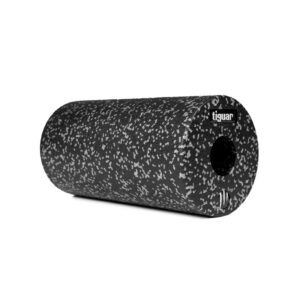
During foam rolling, a muscle area is compressed between your body weight and the roller. You control the pressure yourself by changing body position and adjusting how much weight you place on the roller.
A foam roller is particularly suitable for large and relatively straight muscle areas. It works well for the front and side of the thighs, calves and gluteal muscles. For smaller or difficult-to-reach areas, however, a standard roller may be too wide and imprecise.
During self-massage, the user has to actively maintain body position and move across the roller. For some people this is an advantage because the procedure also involves light physical activity. For others, particularly those with wrist, shoulder or back problems, supporting the body on the floor may be uncomfortable.
Scientific reviews provide the strongest support for the short-term effects of foam rolling on joint range of motion. Its effect on athletic performance and objectively accelerating recovery is considerably smaller and is not always clinically meaningful.
For more information about rolling technique, dosage and choosing the appropriate firmness, read our article “Foam Rolling – Benefits, Technique and Common Mistakes”.
How does a massage gun work?
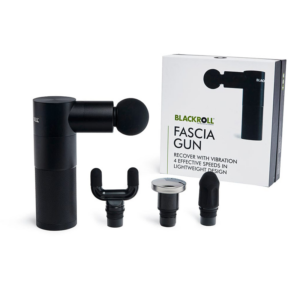
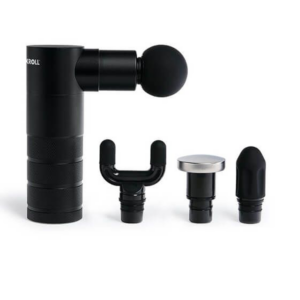
A massage gun performs rapid repetitive movements, mechanically stimulating a muscle area with the selected attachment. The device does not need to be pressed very firmly against the body – the weight of the device and attachment is often sufficient.
The main advantage of a massage gun is convenience. You can sit or stand while gradually moving the device across the thigh, calf, shoulder or forearm. There is no need to lie on the floor or maintain a difficult body position.
A massage gun allows you to target a smaller area than a standard foam roller, although it is still not as precise as a small massage ball. Some areas of the back and shoulders may still require help from another person because maintaining the correct position yourself can be difficult.
The number of studies investigating massage guns remains relatively limited. Systematic reviews suggest possible short-term improvements in range of motion and flexibility, while results for strength, balance, acceleration, jumping and explosive performance have either shown no improvement or, in some studies, worsened.
A detailed comparison of amplitude, device weight, attachments, battery life and other technical characteristics is available in our separate article “How to Choose a Massage Gun?”.
Which tool is better for different areas of the body?
Both methods work well for the thighs, gluteal muscles and calves. A foam roller covers a larger area at once, while a massage gun allows you to concentrate on a specific part of the muscle and adjust treatment without changing your body position.
For the shoulder girdle and arms, a massage gun is generally more convenient. These areas are more difficult to treat with a roller because they require a suitable wall, floor or specific body position.
Neither tool should be used aggressively directly over the vertebrae. A foam roller can be used gently on the muscles of the upper back, while a massage gun should only be moved over the muscular areas alongside the spine rather than directly over bone. For lower-back pain, strong self-massage is not always the most appropriate approach.
For the feet, smaller areas of the gluteal muscles, forearm and areas around the shoulder blade, a massage ball is often more suitable. Its smaller contact area allows more precise control of pressure than either a roller or massage gun.
Which should you use before training?
Before training, either method can be used briefly if a particular muscle group feels stiff or appears to limit the movement you need. The treatment should be light and should not fatigue the muscle or make it painful.
Self-massage does not replace an active warm-up. After using a foam roller or massage gun, continue with dynamic movements, progressively increasing physical intensity and exercises appropriate for your sport.
In a recent study involving trained athletes, longer massage-gun or foam-rolling protocols added to a dynamic warm-up did not improve athletic performance. Some jump-performance measures decreased in both groups, while a slower 20-metre sprint was also observed following massage-gun use. The study was small and the findings cannot automatically be applied to every protocol, but they suggest that prolonged and intensive self-massage immediately before explosive activity is not necessarily beneficial.
Before sprinting, jumping or strength training, self-massage is therefore better viewed as a brief addition rather than the main component of the warm-up.
Which should you use after training?
After exercise, the choice largely depends on personal preference and convenience. A foam roller may be suitable if you want to calmly roll several large muscle groups. A massage gun may be more convenient if you want to remain seated or target one specific area.
Both methods may temporarily reduce the sensation of muscle stiffness or soreness for some people, but they do not guarantee faster recovery of strength, sprinting or jumping ability. In one controlled study, five minutes of massage-gun use following heavy calf exercise did not improve mobility, strength, endurance or subjective recovery.
The most important components of recovery after training remain sufficient sleep, appropriate nutrition, hydration and well-planned subsequent training loads. Foam rollers and massage guns are optional additional tools.
Which is better for a beginner?
For most beginners, a foam roller is the more economical first choice. It is simple, durable and sufficient for self-massage of the thighs, calves and gluteal muscles.
However, for someone with wrist, shoulder or back problems, rolling on the floor may be too difficult. In this situation, the convenience of a massage gun may justify the higher price.
Regardless of the tool, begin with moderate pressure. A very painful treatment does not mean a better result. Excessive pressure can cause protective muscle tension, increase sensitivity and leave significant bruising.
Do you need both tools?
It is not necessary to buy both products. Most people’s everyday self-massage needs can be covered with one good-quality foam roller and a small massage ball.
A massage gun can be a useful addition for people who use self-massage regularly, travel frequently or want a more convenient way to target individual muscle areas. In professional sport and physiotherapy environments, having both tools available can be practical because each is better suited to different situations.
A small direct-comparison study published in 2026 found no meaningful difference between a vibrating roller and percussive massage in their effects on hamstring flexibility and muscle stiffness. The short protocol did not improve these measures, while maximal isometric strength decreased slightly following both techniques. This again suggests that the choice is often better based on convenience, the body area being treated and individual response rather than the assumption that one tool is always more effective.
When should self-massage be avoided?
A foam roller or massage gun should not be used directly over bones, joints, the spine, the front of the neck, open wounds or freshly injured tissues.
Self-massage is not appropriate if there is:
- a suspected fracture or serious muscle tear;
- sudden and unexplained swelling of one leg;
- suspected deep-vein thrombosis;
- an active infection or significant skin damage;
- marked sensory impairment;
- rapidly progressing muscle weakness or numbness.
Additional caution is necessary for people taking medication that affects blood clotting, those with fragile blood vessels or people with significant circulatory problems.
Summary
Foam rollers and massage guns can temporarily improve how muscles feel and make movement more comfortable, but there is no convincing evidence that one is more effective in every situation.
A foam roller is more affordable, silent and well suited to large muscle groups. A massage gun is more convenient, easier to target and useful for people who do not want or are unable to perform self-massage on the floor. For small and precisely localised areas, a massage ball may often be a better choice.
Before training, both methods should be used briefly and moderately, followed by an active warm-up. After training, they can be used for comfort, but they do not replace sleep, nutrition and appropriate training-load planning.
If you need one versatile and affordable self-massage tool, choose a foam roller. If convenience and targeted treatment of individual muscles are the priority, a massage gun may be more suitable.
References
Skinner B, Moss R, Hammond L. A systematic review and meta-analysis of the effects of foam rolling on range of motion, recovery and markers of athletic performance. J Bodyw Mov Ther. 2020;24(3):105–122.
Ferreira RM, Silva R, Vigário P, et al. The effects of massage guns on performance and recovery: a systematic review. J Funct Morphol Kinesiol. 2023;8(3):138.
Sams L. The effect of percussive therapy on musculoskeletal performance and experiences of pain: a systematic literature review. Int J Sports Phys Ther. 2023;18(2):309–327.
Ormeno L, Driller M. Does massage gun or foam roller use during a warm-up improve performance in trained athletes? Sports. 2025;13(9):282.
Fischer J, Manieu Seguel J, Drole K, et al. Effects of percussive massage vs. foam rolling on hamstring function: a comparative study using shear wave elastography, tensiomyography, and MyotonPro. BMC Sports Sci Med Rehabil. 2026;18:317.
Related Articles
📖 Achilles Tendinopathy in Runners – Treatment
📖 BLACKROLL Products – Foam Rollers, Massage Balls and Tools for Everyday Use and Sport
📖 Jumper’s Knee (Patellar Tendinopathy) – Symptoms, Causes and Treatment
📖 Runner’s Knee (Iliotibial Band Syndrome) – Symptoms, Causes and Treatment
📖 Massage Ball: How to Choose and Use a Fascia Ball Correctly
Will a More Expensive Massage Gun Give Better Results Than a Foam Roller?

Aigars Caune
Physiotherapist
Not necessarily. A higher price may mean a better motor, more comfortable handle, longer battery life, lower noise levels or a better warranty, but it does not guarantee a greater physiological effect.
If someone regularly uses self-massage and the convenience of a massage gun helps them use it consistently, the investment may be worthwhile. However, if the main goal is simply to work on the calves, thighs and gluteal muscles a few times per week, a good-quality foam roller may provide everything needed at a significantly lower cost. The most important factor is whether the chosen tool is used regularly, comfortably and at an appropriate intensity.
Recommended Products
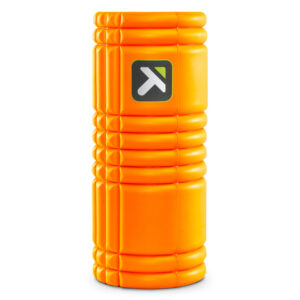
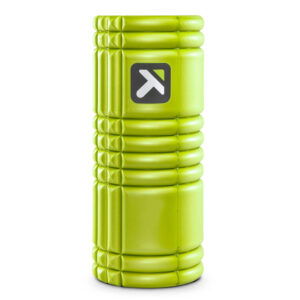
Fascia rolls
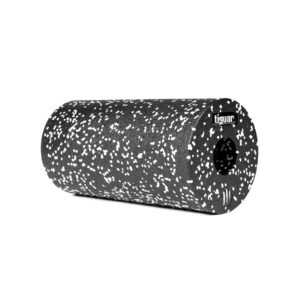
Fascia rolls


Massage guns
Massage guns
Looking for More Practical Physiotherapist Advice?
Visit our Physiotherapist Recommendations section, where you will find articles about exercise, injury prevention, pain relief, load management, rehabilitation principles and safely returning to everyday activities or sport.
View Physiotherapist Recommendations