







Product reviews
Cryotherapy Products for Acute Injuries – How to Choose

Jun
Cold therapy is commonly used after sports injuries, surgery, bruising and physical overload. Its main practical purpose is to temporarily reduce pain and make an injured or overloaded body area feel more comfortable.
However, not all cryotherapy products work in the same way. A cold spray is intended for rapid and short-term cooling, a gel pack provides a longer cooling effect, while a cooling gel primarily creates a cooling sensation on the skin. A cold therapy ball combines local cooling with self-massage.
It is also important to understand that cold itself is not a treatment for an injury. Research most strongly supports its short-term pain-relieving effect, while evidence that cold substantially accelerates tissue healing or prevents the inflammatory response associated with injury is limited. Cold therapy should therefore be viewed as one option for symptom management alongside appropriate load modification and gradual restoration of movement.
Quick comparison of cryotherapy products
| Product type | Most suitable situation | Main advantage |
|---|---|---|
| Cold spray | On the sports field or immediately after a minor impact | No pre-cooling required |
| Instant cold pack | First-aid kits and travel | Can be activated anywhere |
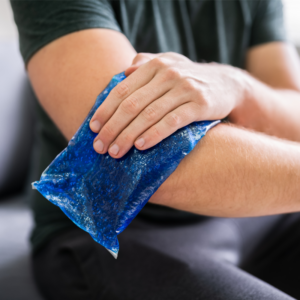
| Reusable gel pack | Regular home use | Longer and more consistent cooling |
| Ice bag | Knee, shoulder, ankle and larger areas | Conforms well to the body |
| Cooling gel | After exercise or for mild muscle discomfort | No freezer required |
| Cold therapy ball | Small and precisely localised areas | Cooling combined with self-massage |
Cold sprays – rapid cooling for sport
Fiziopreces.lv currently offers two cold sprays: Sport Performance COLD SPRAY and Dispotech Dispo Ice Spray. Both are designed for rapid local cooling when a freezer is unavailable or when it is not practical to apply a cold pack immediately.
Sport Performance COLD SPRAY is a 400 ml aerosol containing menthol and peppermint essential oil. It is a practical option for sports teams, coaches and physiotherapists because it can be used immediately following a minor impact or contact situation.
Dispo Ice Spray is available in 200 ml and 400 ml sizes. It has a valve designed for more precise spraying and is classified as a Class IIa medical device. The smaller container is more convenient for an individual sports bag, while the larger size is better suited to a team or medical room.
A cold spray should not be sprayed continuously onto the same point. Hold the can approximately 20 cm or more away from the skin and apply it in short bursts. Spraying too closely or for too long can cause a cold burn.
Cold spray can be useful for immediate, short-term symptom relief, but its cooling effect is shorter and more superficial than that provided by an ice bag or gel cold pack.
Dispotech Easy Ice – cold therapy without a freezer
Dispotech Easy Ice is a disposable instant cold pack. It is activated by squeezing the internal capsule, which starts a reaction that cools the pack. One package contains two 14 × 18 cm packs, and the cooling effect lasts approximately 20–30 minutes.
This is one of the most practical options for a first-aid kit, sports bag, competition or trip. Its main advantage is that no freezer is required. The pack can be stored for a long period and activated only when needed.
Easy Ice is single-use, so a reusable gel pack is generally more economical for regular use at home. For a sports team or while travelling, however, keeping at least one instant cold pack in the first-aid kit can be very practical.
Reusable hot and cold gel packs
One of the most versatile options for home use is a reusable hot and cold pack. Fiziopreces.lv offers several sizes, ranging from a small 13 × 14 cm pack to a large 30 × 40 cm version. The gel remains flexible after cooling, allowing the pack to conform to the knee, shoulder, back, thigh or another body area.
Smaller sizes are suitable for the wrist, elbow, foot or a small bruise. A longer pack can be wrapped more easily around the knee or lower leg, while the largest size is useful for the back or thigh.
Another option is the Dispo Gel reusable hot and cold gel pack with pouch, measuring 14 × 18 cm. The included pouch makes the pack more comfortable to use and reduces the risk of direct contact between the very cold gel and the skin. This size works well for the ankle, elbow, wrist and other relatively small areas.
A very cold pack should not normally be placed directly against bare skin. Use a thin layer of fabric between the skin and the cold pack and follow the instructions supplied with the specific product.
Mueller ice bag – a simple reusable option
The Mueller fabric ice bag is a traditional but highly practical cold therapy product. It can be filled with ice cubes, crushed ice or cold water. Its 22.8 cm diameter is large enough to cover the knee, shoulder, ankle, hip area or thigh.
Compared with a rectangular gel pack, an ice bag adapts particularly well to rounded body areas. It can also be refilled immediately, so there is no need to wait for a previously used gel pack to cool down again in the freezer.
This makes it a useful option for sports clubs, physiotherapy practices and people who use cold therapy regularly. The main limitation is that ice or sufficiently cold water must be available.
Cooling gels – no freezer required, but a different effect
The cryotherapy category includes two cooling gels: Sports Akileine Ice Cool Gel and Polar Frost Aloe Vera. These products are suitable for people who want a cooling sensation without having to hold a cold pack against the body.
Sports Akileine Ice Cool Gel is a 75 ml gel containing menthol, camphor and arnica. According to the manufacturer’s instructions, it is applied once per day with a gentle massage and is intended for adults only.
Polar Frost is a 150 ml gel containing menthol, eucalyptus oil and aloe vera extract. The larger package is practical for more regular application to areas such as the thighs, calves, back or shoulder region.
It is important to understand that a cooling gel is not a direct substitute for an ice pack. Menthol mainly creates a cooling sensation through receptors in the skin, while the depth and duration of tissue cooling differ from a physical cold pack.
A cooling gel is therefore more suitable after physical activity, for tired muscles or mild discomfort than for controlling substantial swelling after a more serious acute injury.
PTP Cold Therapy Ball
The PTP Cold Therapy Ball combines cooling with local self-massage. It contains a removable metal ball that can be chilled, while the ergonomic holder allows it to be moved over the body without freezing your fingers. It can also be used at room temperature as a standard massage ball.
This product is particularly suitable for small, precisely localised areas such as the sole of the foot, calf muscles, forearm or shoulder region.
It is not intended to cool a large swollen area but may be a convenient self-massage tool after physical activity.
Massage pressure should not be aggressive, particularly immediately after an injury. A newly injured, significantly swollen or highly painful area does not need to be forcefully massaged.
Which cryotherapy product should you choose?
For a sports bag or first-aid kit, a cold spray or Dispotech Easy Ice instant pack is usually the most practical choice. Both can be used without any previous preparation.
For regular home use, a reusable gel pack or Mueller ice bag is generally more suitable. These products provide a longer and more consistent cooling effect and are more economical when used repeatedly.
Cooling gels may be more suitable after training, for mild muscle fatigue or in situations where holding a cold pack against the body is inconvenient.
The PTP Cold Therapy Ball is a more specialised option for people who want to combine targeted cooling with local self-massage.
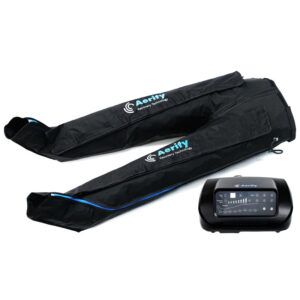
For larger areas and regular post-operative cold therapy, a combined cold and compression system can also be considered. We do not discuss Aerify Cryoboots X in detail here because there is a separate guide explaining how this cryocompression system works and how it can be used.
When should cold therapy not be used without professional advice?
Cold therapy should be used cautiously in people with significant sensory impairment, peripheral circulation problems, Raynaud’s syndrome, highly sensitive skin or neuropathy related to diabetes.
Cold therapy products should not be applied over an open wound or damaged skin unless the manufacturer’s instructions specifically state that the product is suitable for this purpose.
Stop the procedure if burning, sharp pain, marked skin pallor, bluish discolouration or prolonged numbness develops.
If after an injury you cannot bear weight on the affected leg, the joint appears deformed, swelling is increasing rapidly, or numbness or muscle weakness develops, cold therapy alone is not sufficient. Medical assessment is required.
Summary
Cryotherapy products differ not only in price but also in how and when they are intended to be used. Cold sprays and instant cold packs are the most convenient options for first-aid situations, reusable gel packs and ice bags are better suited to regular home treatment, while cooling gels and the PTP Cold Therapy Ball are primarily useful for muscle comfort and local self-care.
None of these products should be considered a stand-alone treatment for an injury. Cold therapy primarily helps with short-term pain control and comfort, while complete recovery depends on an appropriate diagnosis, suitable load management and gradual rehabilitation.
References
Klintberg IH, Larsson MEH. Shall we use cryotherapy in surgical procedures, acute pain or injury, or long-term pain and dysfunction? Journal of Bodywork and Movement Therapies. 2021;27:368–387.
Bleakley C, McDonough S, MacAuley D. The use of ice in the treatment of acute soft-tissue injury: a systematic review of randomized controlled trials. American Journal of Sports Medicine. 2004;32(1):251–261.
Miranda JP, et al. Effectiveness of cryotherapy on pain, swelling, range of motion and function in acute ankle sprain: a systematic review. Physical Therapy in Sport. 2021;49:243–249.
Related Articles
📖 Aerify Cryoboots X – Cryocompression System for Sport and Rehabilitation
📖 Cold Therapy After Knee Surgery – How Often and for How Long?
📖 Lymphatic Drainage Boots at Home – Who Are They Suitable For?
For an acute injury, is a cold spray or gel pack the better choice?

Aigars Caune
Physiotherapist
A cold spray is more suitable when rapid, short-term cooling is required, for example on the sports field after a minor impact. Its main advantage is immediate use without a freezer, but the cooling effect is relatively short and superficial.
For regular use at home, I would usually choose a reusable gel pack or an ice bag because these provide a longer and more consistent cooling effect. Regardless of the product chosen, cold therapy primarily provides temporary relief from pain and discomfort and does not replace injury assessment, appropriate load modification or rehabilitation.
Recommended Products


Cold sprays


Cold/heat packs
More Product Reviews
Interested in learning more about physiotherapy and recovery products? Visit our Product Reviews section for practical articles about exercise equipment, compression therapy, self-massage products and other physiotherapy products.
View Product Reviews