







Physiotherapist's recommendations
Sports Tape: Types, Uses and How to Choose the Right One

Feb
Sports tapes may look similar, but their properties and intended uses can be very different. Rigid or non-elastic sports tape is designed to restrict a specific movement and provide external support to a joint. Elastic adhesive tape conforms more easily to the shape of the body, while a cohesive bandage sticks to itself and is useful for securing dressings, padding or providing light compression.
Kinesiology tape is a separate category of product. It is elastic and usually does not restrict joint movement as much as rigid sports tape. For this reason, these different types of tape are not interchangeable.
Choosing the correct tape is particularly important when taping the ankle, wrist or fingers. A material that is too elastic may not provide the required support, while incorrectly applied rigid tape can cause excessive pressure, tingling, skin irritation or unwanted restriction of movement.
Types of sports tape and their differences
| Tape type | Elasticity | Main use | Most suitable areas |
|---|---|---|---|
| Rigid sports tape | None or very little | Restricting movement and stabilising joints | Ankle, wrist, fingers |
| Elastic adhesive tape | Moderate | Overwrap, light support and securing padding | Ankle, knee, shoulder, thigh |
| Cohesive bandage | Elastic | Light compression and securing dressings | Arms, legs and joints |
| Kinesiology tape | Highly elastic | Applications where freedom of movement is maintained | Muscles and different joint areas |
| Prewrap | Very elastic foam material | Protecting skin and body hair | Under rigid sports tape |
Rigid sports tape for joint stability
Rigid sports tape is a non-elastic or only minimally elastic adhesive tape. Its main purpose is to mechanically restrict unwanted movement while preserving enough movement for the required sporting activity.
It is most commonly used for:
- external ankle support after a previous sprain;
- restricting wrist movement;
- buddy taping or supporting fingers;
- additional support when returning to sport;
- injury prevention in athletes with a history of recurrent injuries.
In sports practice, 3.8 cm is generally the most versatile width, particularly for ankle and wrist taping. Narrower 2.5 cm tape is convenient for fingers and smaller areas, while 5 cm tape is more suitable for larger body areas or wider fixation layers.
Rigid sports tape is not intended to be worn continuously for several days. It is usually applied before training or competition and removed after the activity.
Can sports tape help prevent ankle sprains?
External ankle support using tape or an ankle brace can reduce the risk of ankle sprains in certain groups of athletes. The greatest practical benefit is generally seen in people who have previously sprained their ankle or continue to experience recurrent instability.
Clinical guidelines support the use of taping and ankle braces for ankle injury prevention and after ankle sprains. However, external support should be combined with exercises targeting balance, strength, coordination and a gradual return to sport.
Sports tape cannot completely prevent injuries and does not replace rehabilitation. If the ankle lacks strength, reaction speed or movement control, taping alone will not resolve the underlying problem in the long term.
It is also important to remember that the initial mechanical support provided by rigid tape gradually decreases during activity as the material and adhesive layers loosen slightly with movement and sweating.
Elastic adhesive sports tape
Elastic adhesive sports tape conforms more easily to the anatomical shape of the body than rigid tape. It can stretch longitudinally and usually restricts movement less.
It can be used:
- as a finishing layer over rigid tape;
- to secure padding and protective materials;
- for light joint support;
- for compression applications;
- to secure dressings;
- in areas where greater conformity to the body is required.
Elastic tape is not automatically better than rigid tape. The correct choice depends on the purpose. If the aim is to substantially restrict ankle inversion or wrist movement, rigid sports tape will generally be more suitable.
If you need to cover a larger area, secure padding or maintain greater freedom of movement, elastic adhesive tape may be the more practical option.
Cohesive bandage
A cohesive bandage does not stick to the skin but adheres to itself. This makes it convenient when you want to avoid adhesive directly on the skin or need to secure a dressing quickly.
It can be used for:
- securing dressings and compresses;
- light compression;
- securing padding;
- temporary support around a joint.
A cohesive bandage should not be applied too tightly. If tingling, numbness, increasing pain, coldness or changes in skin colour occur, the bandage should be loosened or removed immediately. Fiziopreces.lv offers cohesive bandages in several different widths.
Sports tape, cohesive bandages and prewrap are often part of a sports team’s medical kit, but these products alone are not sufficient. For a more complete practical list, read What Should Be Included in a First Aid Kit?
Sports tape or kinesiology tape?
These two types of tape are designed for different purposes.
Sports tape
Sports tape is usually rigid and designed to mechanically restrict movement. It is commonly used for a limited period, such as during a particular training session, match or stage of return to sport after an injury.
Kinesiology tape
Kinesiology tape is elastic and designed for applications where almost the full range of movement should be maintained. It may provide a subjective feeling of support or act as a sensory reminder during movement, but it does not provide the same rigid fixation as non-elastic sports tape.
Research reviews have not shown convincing evidence that kinesiology taping substantially improves ankle function or sporting performance in people with or without ankle injuries. It therefore should not be regarded as a replacement for rigid sports tape or an ankle brace when mechanical stabilisation is required.
Is prewrap always necessary?
No. Prewrap is not required for every sports-taping application.
It is more commonly used:
- for sensitive skin;
- when frequent taping is required;
- to reduce pulling on body hair;
- under padding;
- to reduce friction and discomfort;
- when tape covers a large body area.
In professional applications where maximum adhesion of rigid tape is required, some of the tape may be applied directly to prepared skin. However, this increases the risk of skin irritation and painful removal.
Prewrap itself does not stabilise the joint. Its purpose is to protect the skin and improve comfort. Fiziopreces.lv offers Cramer Prewrap and other foam underwrap products for different sports-taping techniques.
How should you prepare the skin for taping?
To help the tape stay in place and reduce skin irritation:
- Make sure the skin is clean and dry.
- Do not use cream, oil or body lotion before taping.
- Excessive body hair may be carefully trimmed, but avoid irritating the skin immediately before applying the tape.
- Check the skin for wounds, rashes or signs of infection.
- If you have sensitive skin, test a small piece of tape first.
- Position the joint according to the selected taping technique.
- Apply the tape evenly, avoiding wrinkles and excessive pressure.
After applying the tape, check circulation and skin sensation. The fingers or foot should not become cold, numb, blue or excessively tingly.
How do you know if sports tape is too tight?
Sports tape should be removed or adjusted if you experience:
- tingling or numbness;
- throbbing or increasing pain;
- cold fingers or feet;
- significant changes in skin colour;
- swelling underneath or beyond the edge of the tape;
- burning or intense itching;
- restriction of movement that interferes with the sporting task.
Do not try to simply tolerate these symptoms. Tape that is too tight can place unnecessary pressure on nerves, skin and circulation.
When should sports tape not be used?
Tape should not be applied:
- directly over an open wound;
- over infected or significantly inflamed skin;
- over recently burned or injured skin;
- when a fracture or dislocation is suspected;
- when there is significant unexplained swelling;
- when circulatory problems are suspected;
- when a person cannot bear weight on the leg after an injury;
- if taping increases pain.
For wounds, an appropriate sterile dressing should be applied first. Sports tape or an elastic bandage can then be used to secure the dressing, but adhesive tape should not be applied directly over the wound.
Sports tape or ankle brace?
Both sports tape and an ankle brace can provide external support, but they have different advantages.
| Sports tape | Ankle brace |
|---|---|
| Can be customised to the individual foot and taping technique | Quick to put on and remove |
| Less bulky inside sports shoes | Reusable |
| Requires taping skills | Support is generally more consistent |
| Single-use material | May be more economical in the long term |
| Can gradually loosen during activity | Straps can often be tightened during use |
The choice depends on the sport, footwear, injury history, level of support required and the person’s ability to apply tape correctly. Research has associated both taping and ankle braces with a reduced risk of ankle sprains, particularly in athletes with previous ankle injuries.
How to choose the right sports tape
Before buying sports tape, first determine what you need the tape to do.
For rigid joint stabilisation
Choose non-elastic sports tape, for example:
- Cramer 1050i;
- Cramer 950;
- Mueller Eurotape;
- Cramer Team Colors Tape.
Cramer 1050i and Cramer 950 are designed for joint support and are available in several widths.
For elastic support or an overwrap
Choose elastic adhesive sports tape, for example:
- Cramer Pro-Lastic Tear Stretch Tape;
- Cramer Super Stretch Non-Tear Tape;
- Mueller M-Lastic;
- Mueller Flexlight.
Elastic adhesive tapes conform well to the shape of the body and can be useful for securing padding and dressings or as a finishing layer over a rigid taping application.
For skin protection
Choose:
- Cramer Prewrap;
- Sixtus Dream Foam prewrap.
For safe tape removal
If you regularly tape athletes, specialised tape or bandage scissors are a practical tool. They allow the application to be cut away while reducing the risk of accidentally injuring the skin.
Common mistakes in sports taping
Most problems are caused not by the tape itself but by choosing the wrong product or using an incorrect technique:
- using elastic tape when rigid stabilisation is required;
- applying the tape too tightly;
- taping damp skin or skin covered with cream;
- using too much prewrap, causing the application to slide;
- leaving rigid tape on after training or competition;
- repeatedly taping irritated skin;
- relying on tape without appropriate rehabilitation;
- trying to use tape to conceal symptoms of a more serious injury.
Key points about using sports tape
Rigid sports tape is generally intended for use during a specific training session, match or other physical activity. It should usually be removed after the activity because it is not designed for continuous wear over several days. Leaving tape on for too long can reduce its initial stabilising effect, trap moisture and increase the risk of skin irritation.
Basic ankle-taping techniques can be learned, but it is advisable to have the technique demonstrated initially by a physiotherapist or sports medicine professional. Incorrectly applied tape may be too loose and fail to provide sufficient support or, conversely, may be too tight and cause tingling, numbness, swelling or circulatory problems.
Prewrap is not essential for every taping technique. It is especially useful for people with sensitive skin, more body hair or when taping is performed regularly. Prewrap reduces friction and makes tape removal easier, although in some rigid taping applications part of the tape is applied directly to clean and dry skin to achieve better adhesion.
Sports tape should never be applied directly over an open wound. An appropriate sterile dressing should be used first and can then be secured with suitable tape or a cohesive bandage. Sports tape may reduce painful movement or provide a greater feeling of stability, but it does not treat the underlying cause of an injury. If pain is severe, persistent or recurrent, the cause should be assessed.
If the ankle regularly feels unstable or repeatedly sprains, tape can provide temporary external support during activity. However, recurrent instability can also indicate deficits in muscle strength, balance, reaction speed or ligament function. In these situations, taping should be combined with targeted stability, strength and movement-control exercises.
Summary
The choice of sports tape should be based on its intended purpose. Rigid tape is designed to restrict movement and provide external joint support, elastic adhesive tape conforms more easily to the shape of the body and helps secure other materials, while cohesive bandages are useful for light compression and securing dressings.
Kinesiology tape is not the same as rigid sports tape and does not provide equivalent mechanical stabilisation. Prewrap can protect the skin but is not necessary for every taping application.
If you need tape following an injury, for recurrent joint instability or during return to sport, it is advisable to first assess the condition of the injury and learn the correct taping technique from a physiotherapist.
References
Martin RL, Davenport TE, Fraser JJ, et al. Ankle Stability and Movement Coordination Impairments: Lateral Ankle Ligament Sprains Revision 2021. J Orthop Sports Phys Ther. 2021;51(4):CPG1–CPG80.
Dizon JMR, Reyes JJB. A systematic review on the effectiveness of external ankle supports in the prevention of inversion ankle sprains among elite and recreational players. J Sci Med Sport. 2010;13(3):309–317.
Verhagen EA, van der Beek AJ, van Mechelen W. The effect of tape, braces and shoes on ankle range of motion. Sports Med. 2001;31(9):667–677.
Doherty C, Bleakley C, Delahunt E, Holden S. Treatment and prevention of acute and recurrent ankle sprain: an overview of systematic reviews. Br J Sports Med. 2017;51(2):113–125.
Nunes GS, Vargas VZ, Wageck B, et al. Kinesio taping does not improve ankle functional or performance in people with or without ankle injuries: systematic review and meta-analysis. Clin Rehabil. 2021;35(2):182–199.
Related Articles
📖 CureTape Kinesiology Tapes – Popular Therapeutic Taping
📖 Buying Sports Tape Online – How to Choose
📖 Ankle Sprain, Rehabilitation and Ankle Braces
Can Sports Tape Replace Ankle Stability Exercises?

Aigars Caune
Physiotherapist
No. Sports tape can provide additional external support during training or competition, but it does not improve muscle strength, balance or reaction speed. After an ankle sprain, tape is best used together with progressive rehabilitation rather than as the only solution.
For athletes with recurrent ankle sprains, I often use taping during the return-to-sport phase, particularly during the first weeks of full training. At the same time, balance, jumping, landing and change-of-direction exercises are continued.
Recommended Products
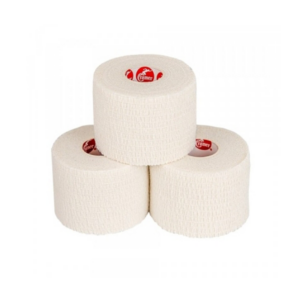

For teipping


For teipping


For teipping


For teipping
Looking for More Practical Physiotherapist Advice?
Visit our Physiotherapist Recommendations section, where you will find articles about exercise, injury prevention, pain relief, load management, rehabilitation principles and safely returning to everyday activities or sport.
View Physiotherapist Recommendations