






Orthoses
Knee orthoses – a complete physiotherapist’s guide
Jun
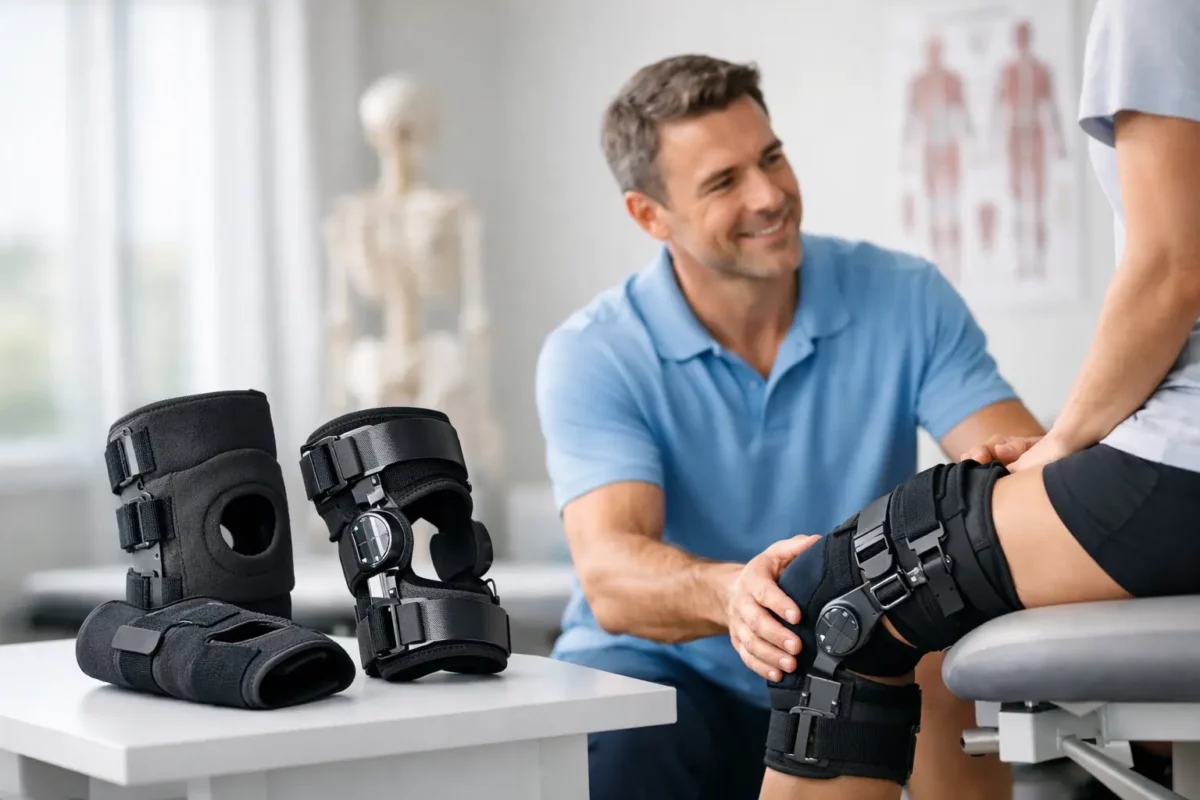
After a knee injury or prolonged pain, people often look for one quick solution – to get an orthosis and continue with their usual routine. However, knee orthoses: a complete physiotherapist’s guide begins with a crucial clarification – an orthosis can be very useful, but only if it corresponds to the specific problem, activity level, and recovery phase. An incorrectly chosen orthosis often does not help but creates a false sense of security, pressure, or movement restriction where it is not needed.
That is why a knee brace is not just “knee support.” It can reduce pain, stabilize the joint, limit unwanted movements, improve confidence in movement, and help you return to daily life or sports. At the same time, an orthosis does not replace diagnostics, load adjustment , or muscle function. The best result usually occurs when the orthosis is part of the plan, not the only component of the plan.
When a knee orthosis is really needed
Knee orthoses are used in various situations, and this is where most mistakes begin. One person needs light compression support for daily workload, another needs a mechanically stabilizing orthosis after a ligament injury or surgery. If these two needs are mixed, the result will be unsatisfactory.
More often, an orthosis is useful after a sprain, meniscus injury, knee instability, ligament injuries, patellofemoral pain, arthrosis, or when returning to physical exertion after rehabilitation. Also, during prolonged overload, for example, runners, people with physical labor, or those who walk a lot on stairs daily, an orthosis can provide noticeable relief.
However, there is an important “it depends” aspect. If the knee is severely swollen, locked, suddenly unable to bear weight, there is suspicion of an acute ligament tear, or if pain rapidly increases after the injury, an orthosis is not the first step without an evaluation from a doctor or physiotherapist. In such cases, it is first necessary to understand exactly what is damaged.
Knee orthoses – a complete physiotherapist’s guide on the types of orthoses
In practice, knee orthoses can be classified based on how much support they provide and the type of movement they affect.
Soft compression orthoses
Soft compression orthoses are the most commonly chosen type of orthosis for everyday use. They usually provide gentle compression, warmth, and proprioceptive support – meaning the knee “feels” more stable during movement. Such orthoses are often well suited for mild overload pain, early signs of osteoarthritis, mild feelings of instability, or during exertion.
Their advantage is comfort and ease of use. The drawback is that it cannot replace firmer stabilization if there is a more serious ligament or joint problem.
Orthoses with side supports
If greater control is needed in the medial and lateral directions, for example, after ligament sprains or a pronounced feeling of instability, orthoses with side inserts or hinges are more often chosen. They help limit unwanted movement and provide a safer feeling during exertion.
They are often a good middle ground between comfort and stability. At the same time, it should be noted that a sturdier structure will appear bulkier under clothing and for some users will be less comfortable for prolonged sitting or daily wear at work.
Patella-stabilizing orthoses
If the pain is more concentrated around the knee, especially during squats, stairs, or prolonged sitting, orthoses supported by the patella can help. They are designed to guide the knee and control the load around the front part of the knee.
However, there are nuances here. Not all anterior knee pain is related solely to the patella. Sometimes the main issues are hip control, ankle mobility , or the amount of load, so even the best orthosis will provide only partial effect if other factors are not addressed.
Postoperative and movement-limiting orthoses
These orthoses are used after surgeries, more serious injuries, or in cases where bending and straightening need to be limited within a certain range. They are functionally very important, but they are not meant for “just in case.” Here, the choice is based on the instructions of a doctor or rehabilitation specialist.
Why you shouldn’t rush into choosing a knee orthosis
After a knee injury or surgery, the first instinct is often to find the “right” knee orthosis as soon as possible. However, in practice, rushing is not always the best solution. An orthosis can be an important part of recovery, but it does not solve the problem by itself. It is much more important to understand the nature of the injury, what instructions the attending doctor or surgeon have, and to create a gradual rehabilitation plan.
During the acute phase, especially after surgeries, not only movement restrictions often change, but also the condition of the knee. In the first weeks, swelling may be pronounced, but it gradually decreases later. This means that an orthosis that fits well immediately after an injury can become too loose after a few weeks and no longer provide the necessary stability. In other cases, as rehabilitation progresses, it is necessary to replace the rigid immobilizing orthosis with a lighter model or to abandon it altogether.
Therefore, before purchasing an orthosis, it is worth consulting a physiotherapist or another medical specialist who will evaluate not only the knee itself but also the quality of movement, load tolerance, and rehabilitation goals. A well-designed rehabilitation plan involves much more than just choosing an orthosis – it mainly involves load dosing, restoration of strength and movement control, as well as regular adjustment of the plan according to the healing process. A properly chosen orthosis can be a very valuable aid, but it delivers the best results when it is part of a well-thought-out and individually tailored treatment strategy.
How to correctly measure the knee when choosing a knee orthosis?
The correct size is one of the most important factors for a knee orthosis to provide the necessary support and be comfortable in everyday use. However, it should be noted that different manufacturers use different measurement methods, so always check the size chart of the specific product.
To choose a suitable size:
- Measure the knee with a soft measuring tape. Depending on the orthosis model, it may be necessary to measure the knee circumference, thigh, or lower leg circumference at a certain distance from the knee.
- Take measurements standing upright. This helps achieve a more accurate circumference because the muscles are in their natural position.
- Do not tighten the measuring tape too tightly. It should fit the skin, but it must not compress the tissues.
- If you are between two sizes, follow the specific manufacturer’s recommendations or consult a specialist, as the choice may depend on the type of orthosis and the intended use.
The correctly chosen orthosis size is just as important as the type of orthosis itself. The diagram below shows the most commonly used measuring points to help choose the most suitable size.

💡 Important: Different manufacturers use different measurement methods. Always check the size chart of the specific knee orthosis before ordering.
Most common mistakes
- Measurements are taken over thick clothing.
- A size chart from another manufacturer is used.
- The choice is based on the size of the shoe or clothing, not on actual measurements.
- An orthosis that is too tight is chosen, thinking it will provide greater stability.
If you are unsure about the most suitable size or type of orthosis, we recommend contacting our specialists — we will help you choose the most suitable solution for your situation.
How to choose the right knee orthosis
A good question is not “which orthosis is the best,” but “which orthosis is suitable for my current situation.” Four factors are important in the choice: the type of problem, the level of load, the required level of stability, and the duration of wear.
If the knee hurts after longer walks and fatigue is felt, a compression orthosis is often sufficient. If the problem is instability in turns, sports, or after an injury, more stabilizing models should be considered. If the orthosis is intended for all-day use, the balance between the material’s breathability and fit will be important. If it is only needed for training, mechanical support can be the priority.
Size is also very important. An overly tight orthosis causes pressure, friction, and can disrupt blood circulation. Too loose will slide, wrinkle, and fail to provide the expected effect. Therefore, measurements must be taken precisely, based on the size chart of the specific model, rather than the habit of choosing “your usual size.”
The most common mistakes when buying a knee orthosis
The most common mistake is choosing an orthosis based on appearance or reviews rather than function. What works wonderfully for a friend after meniscus irritation may be unsuitable for a person with osteoarthritis or patella problems.
Another common mistake is wearing the orthosis for too long without a plan on how to gradually phase it out. If muscles and movement control are not trained, a person can become increasingly dependent on external support. The orthosis is an aid, not a substitute, for the operation of the movement system.
The third mistake is to expect the pain to disappear immediately, completely. Sometimes an orthosis reduces symptoms by 20 to 40 percent, and that is already a good result because it allows for better movement, sleep, or starting to exercise. Partial relief is also valuable in rehabilitation.
How to properly use a knee orthosis daily and in sports
The knee orthosis should be placed so that it fits snugly but does not compress. At first, it is worth wearing it for shorter periods and assessing whether pressure points, tingling, or discomfort appear. If the orthosis starts to slip after 20 to 30 minutes, the most likely problem is with the size or pattern.
In sports, an orthosis should help maintain the quality of movement, not encourage ignoring pain. If the orthosis allows you to train more technically correctly and with less discomfort, it performs its function. If the pain persists or increases, load adjustment is necessary, not just stricter support.
In everyday life, the principle of using an orthosis works well for many people in situations where the load is greater—longer walks, walking work, training, hikes. It is usually not needed around the clock unless it is part of a specific medical plan.
Does a knee orthosis help with osteoarthritis, sports injuries, and pain without trauma?
Yes, but the effect varies depending on the cause. In osteoarthritis, an orthosis often reduces pain during exertion and helps one feel more secure while moving. This is especially important for people who start moving less due to pain, as it worsens both muscle strength and joint tolerance to load.
After sports injuries, an orthosis can be very valuable during the transition phase—from the acute phase to a controlled return to activities. It provides mechanical and psychological support, which for athletes is often just as important as physical stability.
On the other hand, an orthosis can help for pain without obvious trauma if the cause is overload, repetitive movements, or slight instability. If the cause is an inflammatory process, a pronounced biomechanical problem, or pain radiating from the hip or back, the orthotic effect will be limited.
When orthosis alone is not enough
If the knee regularly swells, slips, locks, or the pain interferes with sleep, an orthosis alone will not be enough. Even if an orthosis only helps as long as it is in place, but without it the symptoms return fully, the broader perspective is necessary.
Usually, the most effective approach is to combine an orthosis with targeted exercise, load dosing, and, if necessary, specialist consultation. This is exactly where a specialized approach comes in handy – not just buying support, but understanding why the knee hurts and what function the specific model needs to perform. Fiziopreces.lv in such cases, clients are most helped by a clear orientation between different orthosis solutions and their applications.
What is worth considering
A good orthosis solution is no longer just stiffer material or more straps. The balance between stability, comfort, and practical usability in everyday life is becoming increasingly important. People want an orthosis that can be put on quickly, worn longer without irritation, and used for a specific purpose rather than “for every occasion.”
Therefore, the smartest choice is usually not the strictest model, but the most precise. If the orthosis addresses your knee problem, load, and recovery phase, it can become a very practical tool on the path to safer movement. And the main thing is not just to stabilize the knee, but to help you move again with confidence.
Which knee orthosis to choose in different situations?
The table below helps to quickly understand which type of knee orthosis is most commonly used for various knee problems.
However, the most appropriate choice always depends on the diagnosis, cause of the pain, and level of activity.
| Situation | The most commonly suitable orthosis | When is it useful? |
|---|---|---|
| ACL surgery | Hinge path orthosis | After anterior cruciate ligament surgery, when controlled stability is required. |
| Meniscus injury | Stabilizing knee orthosis | If additional knee support is needed daily or when returning to exertion. |
| arthrosis | Compression or unloading orthosis | If necessary, reduce the load on the knee and improve comfort during movement. |
| Runner’s knee | Compression knee orthosis | For easy support, proprioception, and comfort during running or sports. |
| Knee instability | Stabilizing knee orthosis | If the knee needs additional lateral support and a greater sense of security. |
💡 Important: this table is a general guide. If the pain is severe, arises from an injury, or does not subside for a long time, it is recommended to consult a doctor or physiotherapist before choosing an orthosis.
When might a knee orthosis not be the most suitable solution?
Although a knee brace can help reduce pain, improve stability, and provide additional support daily or during sports, it is not always the best solution. Sometimes it is more important to identify the cause of the pain and choose the appropriate treatment.
A knee orthosis alone may not be sufficient if:
- An orthosis is being sought as the only solution. A knee brace can help alleviate symptoms and provide additional support, but in most cases, it does not address the cause of the pain. In the long term, the best results are achieved through proper diagnostics, individually tailored physiotherapy exercises, and a gradual increase in load.
- The orthosis is used excessively long, neglecting physiotherapy. In some cases, prolonged use of orthoses without active rehabilitation can delay full recovery. An orthosis is an aid, not a substitute, for improving muscle strength, movement control, and joint function.
- The cause of the pain is unclear. If knee pain arises suddenly, after an injury, or does not subside for a long time, a consultation with a doctor or physiotherapist is recommended first.
- The orthosis is used only for a “sense of security.” If there is no knee instability or a specific diagnosis, an orthosis does not always provide additional benefits.
- The orthosis causes discomfort or intensifies pain. If the orthosis presses, slides, restricts movement more than necessary, or increases pain, the wrong size or type of orthosis may have been chosen.
A properly chosen knee orthosis can be a valuable aid, but the best results are usually achieved when used together with precise diagnostics, physiotherapy, and gradual load increase.
Related articles about knee orthoses
Fiziopreces.lv team has prepared practical articles on the selection, use, rehabilitation, and most common knee injuries of knee orthoses.
Choose the topic most relevant to you and learn more.
How to choose a knee orthosis correctly
Learn how to choose the most suitable knee orthosis according to the injury, cause of pain, and activities.
Does a knee brace help runners?
Find out when a knee brace can help runners reduce pain and return to running more safely.
Read the article →The most common mistakes when using a knee orthosis
Avoid mistakes that reduce the effectiveness of the orthosis and may slow down knee recovery.
Read the article →How long should a knee orthosis be worn after an injury?
We explain how long a knee orthosis is usually used after an injury or surgery and what it depends on.
Read the article →Hinge orthosis or compression orthosis – what is the difference?
We compare hinge and compression path orthoses to help choose the most suitable solution.
Read the article →Knee orthosis in case of osteoarthritis
Find out in which cases a knee orthosis can help with osteoarthritis and how to choose the right model.
Read the article →Meniscus tear – which knee orthosis is most suitable?
Practical tips on how to choose the right knee orthosis for safer recovery after a meniscus injury.
Read the article →Knee orthosis or physiotherapy – which is more important?
Find out when an orthosis is sufficient, when physiotherapy is needed, and why both options often need to be combined.
Read the article →How to choose a knee orthosis after ACL surgery
Pain below the knee during exercise – does an orthosis help?
Knee orthoses for children and teenagers – when are you needed?
Knee orthosis for sports – when does it really help?
Does a knee orthosis by itself treat knee pain?

Aigars Caune
physiotherapist
No. A knee orthosis can reduce pain, improve stability, and provide greater confidence while moving, but it does not address the root cause of the pain. If the problem is muscle weakness, ligament injury, meniscus damage, or osteoarthritis, an orthosis is only part of the solution. In the long term, the best results are achieved by combining a properly chosen orthosis with physiotherapy, strength exercises, and gradual increase in load.
Recommended knee joint orthoses

Orthosis and compression clothing

Orthosis and compression clothing

Orthosis and compression clothing


Orthosis and compression clothing
More articles about orthoses
Interested in more information about orthoses? Check out our orthosis guide, where you will find articles about knee, ankle, wrist, and other orthoses.
View the orthosis guide