






Physiotherapist's recommendations, Uncategorized
Foam Roller: Benefits, How to Use It and Common Mistakes

Jul
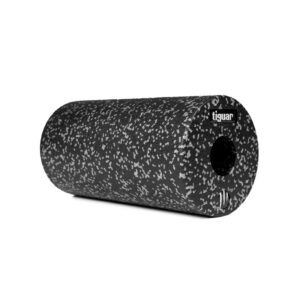
A foam roller, sometimes called a fascia roller, is a simple self-massage tool used by professional athletes as well as people who want to reduce the feeling of muscle tightness, improve freedom of movement or prepare for training. Foam rollers are available in different sizes, densities and surface textures, so a suitable option can be found for almost any user.
However, exaggerated claims about foam rolling are also common. It is sometimes described as a method that “breaks up adhesions”, “removes toxins”, lengthens muscles or mechanically releases fascia. Current research does not support these claims.
Foam rolling can temporarily improve joint range of motion, reduce the sensation of muscle tenderness and help a person feel more mobile. It can be a useful addition to a warm-up or recovery routine, but it does not replace strength training, regular physical activity, sleep or appropriately managed training load.
What is fascia?
Fascia is a connective-tissue system that surrounds and connects muscles, tendons, nerves, blood vessels and other structures throughout the body. It is not a separate sheet of tissue that can simply be “unstuck” or rolled out.
Fascial and muscular tissues respond to movement, loading, prolonged inactivity and injury. However, the sensation that a muscle feels stiff or tight does not necessarily mean that the fascia has physically shortened or developed adhesions.
During foam rolling, mechanical pressure stimulates receptors in the skin, muscles and connective tissues. This may alter how the nervous system responds to pressure and movement, temporarily increasing stretch tolerance or reducing the sensation of tightness.
Research has not provided convincing evidence that the pressure generated by body weight on a foam roller directly “breaks” adhesions or permanently remodels fascia. The benefits are more likely related to a combination of mechanical and neurophysiological mechanisms.
What are the benefits of foam rolling?
It may temporarily improve range of motion
One of the best-studied effects of foam rolling is a temporary improvement in joint range of motion. After rolling, a person may feel less restricted and certain movements, such as a squat or leg raise, may feel easier.
Systematic reviews have found that foam rolling can produce a small acute improvement in range of motion without significantly reducing muscle strength, power or athletic performance.
This effect is generally temporary. It does not mean that a single foam-rolling session permanently lengthens muscles or fascia. For long-term improvements in movement capacity, foam rolling is better combined with active mobility exercises, strength training through a full range of motion and movements specific to the activity being performed.
It can be useful before training
A foam roller can be used as one component of a warm-up, particularly when a muscle group feels stiff or appears to restrict movement.
Before training, foam rolling may help to:
- temporarily improve freedom of movement;
- reduce the sensation of muscle stiffness;
- prepare a specific body area for movement;
- create a subjective feeling of better readiness for training.
Foam rolling should not take up the entire warm-up. It should be followed by active movement, a gradual increase in heart rate and exercises specific to the planned activity or sport.
For example, before a lower-body strength session, you might briefly roll the calves, quadriceps and gluteal muscles. This should then be followed by active ankle, hip and knee movements, squats and progressively heavier warm-up sets.
It may reduce post-exercise muscle soreness
For some people, foam rolling may help reduce delayed onset muscle soreness, or DOMS, which commonly develops 24–48 hours after unfamiliar or intensive exercise.
However, research findings are not completely consistent. Some reviews report small improvements in muscle soreness and perceived recovery, while more recent analyses have not found convincing benefits for soreness, swelling, range of motion or strength recovery compared with passive rest.
Foam rolling should therefore be viewed as an optional method for improving how you feel rather than as a technique that dramatically accelerates muscle-tissue recovery.
If rolling makes you feel more comfortable and mobile, it can reasonably be included in your recovery routine. If you notice little benefit, foam rolling is not essential.
It may help reduce the sensation of tightness
After prolonged sitting, standing or physical activity, people commonly report stiffness in the calves, thighs, gluteal muscles or upper back.
Calm, controlled foam rolling may help to:
- direct attention to the area that feels tight;
- gradually reduce sensitivity to pressure;
- improve movement comfort;
- relax after physical activity.
This does not mean that the roller removes the underlying cause of recurring tightness. If the same area repeatedly feels stiff, it is also worth considering training load, working position, movement variety, muscle strength and sleep quality.
How should you use a foam roller?
Place the roller underneath the selected muscle group and use your hands or the opposite leg to control how much body weight is applied. Slowly move your body over the roller while avoiding rapid or uncontrolled movements.
The pressure should be noticeable but tolerable. There is no need to create maximum pain.
A practical approach is:
- Start with light pressure.
- Slowly roll along the length of the muscle.
- Reduce the speed when you reach a more sensitive area.
- Breathe normally and try not to tense the entire body.
- If pain increases or becomes sharp, reduce the pressure or stop rolling.
Foam-rolling durations used in research vary considerably, so there is no single ideal dose. One systematic review suggested that approximately 90 seconds per muscle group may be a minimum duration for reducing muscle soreness in some circumstances, although the overall evidence is heterogeneous.
For everyday use, a practical starting point is approximately 30–60 seconds per area, increasing to around 90–120 seconds if necessary and comfortable.
Foam rolling before training
Before exercise, shorter and somewhat more dynamic rolling can be used:
- 30–60 seconds per muscle group;
- approximately 3–6 minutes in total;
- moderate pressure;
- followed by an active warm-up.
There is no need to roll the entire body. Focus on the muscle groups that will be most heavily involved in the upcoming session or areas where you feel movement is restricted.
For example, before running you might roll the calves, quadriceps and gluteal muscles. This should then be followed by walking, light running, dynamic mobility exercises and progressively faster accelerations.
Foam rolling after training
After training, rolling can be slower and more relaxed:
- 60–90 seconds per muscle group;
- low to moderate pressure;
- relaxed breathing;
- avoid aggressively massaging very painful areas.
Foam rolling can be used as part of an evening recovery routine. However, the most important recovery factors remain adequate sleep, nutrition, hydration and appropriately planned training load for the following sessions.
Which areas of the body can you foam roll?
Calf muscles
Sit on the floor and place the roller underneath your calf. Support your body with your hands and slowly move the leg over the roller from above the Achilles tendon towards the area below the knee.
Avoid rolling directly over a painful Achilles tendon or the back of the knee. Pressure can be increased by placing the opposite leg over the leg being rolled.

Front of the thigh – quadriceps
Lie on your stomach, place the roller underneath the thigh and support yourself on your forearms. Slowly move from the front of the hip towards the area just above the knee.
Avoid applying direct pressure over the kneecap or other prominent bony areas.

Back of the thigh – hamstrings
Sit with the roller underneath the back of the thigh. Support your body with your hands and slowly move from the gluteal fold towards the area above the knee.
If the pressure feels too intense, keep more of your body weight supported through the opposite leg.

Gluteal muscles
Sit on the roller and rotate your body slightly towards one side. Slowly work over the gluteal muscles rather than applying direct pressure over the sacrum or prominent bony areas of the hip.

Upper back
Place the roller underneath the thoracic spine and keep your hands behind your head or crossed in front of your chest. Slowly move through a small range over the upper-back region.
Aggressive rolling directly over the lower back is generally unnecessary. In this area, the roller can create uncomfortable pressure and it can be more difficult to control spinal position and loading accurately.

Should you foam roll the iliotibial band?
The outside of the thigh, particularly the iliotibial band or IT band, is often one of the most painful areas people try to foam roll. However, the iliotibial band itself is a dense connective-tissue structure that cannot be meaningfully lengthened with a foam roller.
Aggressively rolling directly over a painful outer thigh may simply increase sensitivity.
A more practical approach is to work on the surrounding areas:
- gluteal muscles;
- anterior and lateral thigh muscles;
- the front of the hip;
- the area around the tensor fasciae latae muscle.
If pain is located around the outside of the knee and repeatedly develops while running, running load, hip and knee muscle strength and other possible causes of the symptoms should also be assessed.
Common foam-rolling mistakes
Using too much pressure
Foam rolling does not need to be extremely painful to be effective. Excessive pressure may provoke a protective response in which the muscles tense further rather than relax. It may also cause bruising, local tenderness and increased pain after the session.
The pressure should be noticeable but controllable. You should be able to breathe normally, relax the muscle being treated and maintain a stable body position. If you have to hold your breath, tense the entire body or feel an urgent need to stop, the pressure is probably too high.
Beginners should start with a softer roller or keep part of their body weight supported through the hands and opposite leg. Pressure can gradually be increased as you become accustomed to rolling.
Rolling too quickly
Moving quickly from one end of a muscle to the other often makes it difficult to control pressure or identify more sensitive areas. This resembles rapidly sliding across the tissues rather than controlled self-massage.
Slower movements make it easier to adjust body weight, move calmly over sensitive areas and avoid direct pressure on joints or bony structures.
If you find a particularly sensitive spot, there is no need to aggressively “dig into” it. Reduce the speed, slightly decrease the pressure and continue with small, controlled movements.
Rolling directly over joints and bones
Foam rollers are intended primarily for muscular and other soft-tissue areas. There is no need to roll directly over the kneecap, ankle bones, elbow, spinal processes, hip bones or other prominent bony structures.
Pressure directly over bone or a joint usually creates sharp, unpleasant pain without providing additional benefit. As you approach a joint, slow down and stop before reaching the bony area.
For example, when rolling the quadriceps, stop slightly above the knee instead of continuing over the kneecap. When rolling the calf, avoid pressing directly over the ankle bones or behind the knee.
Spending too long on one area
Longer rolling does not necessarily produce a better result. Maintaining high pressure over one area for too long may increase tissue sensitivity and cause local irritation.
Approximately 30–90 seconds per muscle group is usually sufficient for general use. You can spend slightly longer on a sensitive area, but the pressure should remain tolerable and the sensation should gradually become more comfortable rather than more painful.
If increasing pain, burning, tingling, numbness or radiating pain develops during rolling, stop immediately. These symptoms may indicate irritation of a nerve or another sensitive structure.
Using foam rolling instead of rehabilitation
Foam rolling may temporarily reduce feelings of tightness or soreness, but it cannot replace progressive strength, mobility and movement training.
If someone has Achilles tendinopathy, pain at the front of the knee, recurring back pain or another overuse-related problem, simply rolling the painful area is unlikely to be sufficient. Training volume, movement technique, muscle strength and the response of the affected area to loading should also be assessed.
Sometimes foam rolling temporarily reduces symptoms, but the pain returns after every training session. In this situation, the cause of the problem needs to be addressed rather than repeatedly massaging the painful area. Long-term improvement usually requires load modification and gradually increasing the tissue’s ability to tolerate load.
Aggressively rolling an acute injury
A fresh muscle injury, significant swelling, bruising or sharp pain should not be treated with heavy foam-rolling pressure. Aggressive rolling during the early stage of an injury may increase pain, tissue irritation and bleeding in the injured area.
During the first days after an acute injury, it is more important to determine the nature of the injury and choose an appropriate loading strategy. Foam rolling can be introduced later if it does not provoke pain and is appropriate for the specific injury.
Particular caution is required if you cannot normally bear weight through the limb, swelling is rapidly increasing, there is significant loss of strength or pain is precisely localised over a bone. In these situations, professional assessment should come first.
When should you avoid foam rolling?
Expert consensus has identified an open wound and bone fracture as contraindications to foam rolling. Several other medical conditions require additional caution and individual clinical assessment.
A foam roller should not be used directly over an area with:
- an open wound or active skin infection;
- a known or suspected bone fracture;
- a recent injury with significant swelling or haematoma;
- sharp, unexplained pain;
- significant sensory disturbance;
- a recent surgical wound.
Consult a doctor or physiotherapist before foam rolling if you have diagnosed deep vein thrombosis, significant circulatory problems, increased bleeding risk, use anticoagulant medication, have severe osteoporosis or a serious neurological condition.
Stop rolling immediately if you develop tingling, numbness, sharp pain, dizziness or other unusual symptoms.
How do you choose the right foam roller?
Soft and smooth foam roller
Suitable for beginners, people with high tissue sensitivity and gentle self-massage. It creates less pressure and is generally more comfortable during the first few sessions.
Medium-density foam roller
A versatile option for regular use, warm-ups and recovery routines. It provides noticeable pressure without being excessively aggressive.
Firm or textured foam roller
Suitable for experienced users who prefer stronger pressure and can control it accurately. Ridges and projections do not automatically make a roller more effective, so there is no need to choose the most painful model available.
Small foam roller
Convenient for the calves, feet, forearms and other smaller areas. Its compact size also makes it easy to take to training sessions or competitions.
Massage ball
A massage ball allows more precise pressure over a smaller muscular area, for example around the foot, gluteal muscles or muscles surrounding the shoulder blade.
It produces more concentrated pressure than a roller, so beginners should use it carefully.
Vibrating foam roller
Vibration may improve comfort and range of motion for some users, but it is not necessary for effective foam rolling. The choice depends mainly on personal preference, frequency of use and available budget.
Frequently Asked Questions
Frequently asked questions about fascia rollers and their use
The fascia roller can be used several times a week or daily if the roller does not cause bruising, increased pain, or other unwanted symptoms. Most often, 30–90 seconds per muscle group is enough.
There is no need to stretch your entire body every day. It is better to choose muscle groups where stiffness is felt on that particular day or which will be more heavily loaded during training. If sensitivity increases after rolling, the pressure, duration, or frequency of use should be reduced.Rolling can temporarily improve blood circulation and alter the appearance of the skin and subcutaneous tissues, so the skin may feel smoother for a short time. However, the fascia roller does not eliminate cellulite structure or reduce body fat.
In the long term, body composition is more influenced by regular physical activity, strength training, nutrition, and overall energy balance. The fascia roller can be used to improve well-being, but not as the main method for reducing cellulite.Mild to moderate discomfort is acceptable, but rolling does not have to be too painful. Sharp, burning, or hard-to-tolerate pain may indicate excessive pressure or irritation of a sensitive tissue.
Overly painful rolling has not been proven to be more effective. Moderately intense and controlled pressure is usually sufficient to temporarily improve freedom of movement and reduce the feeling of muscle tension.Both stretching and fascia rollers can temporarily improve the range of motion. None of the methods is universally better, as the choice depends on the goal, the specific body area, and individual sensations.
A fascia roller more often helps reduce the feeling of stiffness, while stretching allows targeted training of movement in a specific direction. The best practical results are often achieved by combining these methods with active mobility and strength exercises.The fascia roller can be used both before and after training. Before training, shorter rolling is recommended—about 30–60 seconds per muscle group—followed by an active warm-up and sports-appropriate movements.
After training, rolling can be done more slowly and calmly to reduce muscle stiffness and tenderness. However, it does not replace sleep, a balanced diet, fluid intake, or properly planned recovery.Can a foam roller treat injuries?
A foam roller may temporarily reduce muscle tenderness, but it does not treat ligament tears, tendon tendinopathy, bone stress injuries or other structural problems.
An injury requires appropriate diagnosis, load modification and progressive rehabilitation.
Summary
A foam roller is an accessible and practical self-massage tool that can temporarily improve range of motion, reduce the sensation of muscle tenderness and help prepare the body for physical activity.
It can be used before training, after training or on days when muscles feel stiff. For most users, approximately 30–90 seconds of controlled rolling per muscle group using tolerable pressure is sufficient.
It is important to remember that a foam roller is not designed to “break up” adhesions and does not replace strength training, load management or professional treatment. If pain is sharp, progressive or repeatedly returns during training, assessment by a physiotherapist or doctor is appropriate.
References
Wiewelhove T, Döweling A, Schneider C, et al. A Meta-Analysis of the Effects of Foam Rolling on Performance and Recovery. Frontiers in Physiology. 2019.
Behm DG, Wilke J. Do Self-Myofascial Release Devices Release Myofascia? Rolling Mechanisms: A Narrative Review. Sports Medicine. 2019.
Wilke J, Müller AL, Giesche F, et al. Acute Effects of Foam Rolling on Range of Motion in Healthy Adults: A Systematic Review with Multilevel Meta-analysis. Sports Medicine. 2020.
Hughes GA, Ramer LM. Duration of Myofascial Rolling for Optimal Recovery, Range of Motion, and Performance: A Systematic Review of the Literature. International Journal of Sports Physical Therapy. 2019.
Konrad A, Nakamura M, Bernsteiner D, Tilp M. The Accumulated Effects of Foam Rolling Combined with Stretching on Range of Motion and Physical Performance. Journal of Sports Science and Medicine. 2021.
Konrad A, Alizadeh S, Daneshjoo A, et al. Foam Rolling Training Effects on Range of Motion: A Systematic Review and Meta-Analysis. Sports Medicine. 2022.
Related Articles
📖 Achilles Tendinopathy in Runners – Treatment and Rehabilitation
📖 BLACKROLL Products – Foam Rollers, Massage Balls and Massage Tools for Sport and Everyday Use
📖 Jumper’s Knee (Patellar Tendinopathy) – Symptoms, Causes and Treatment
📖 Runner’s Knee (Iliotibial Band Syndrome) – Symptoms, Causes and Treatment
📖 Foam Roller or Massage Gun – Which Should You Choose?
How Do You Know Whether Foam Rolling Is Actually Helping?

Aigars Caune
Physiotherapist
A foam roller is useful when you feel more mobile after using it and can perform the required exercises more comfortably or effectively. However, foam rolling should not become an endless battle with one “tight” area. If the same muscular tightness repeatedly returns, look for the reason. Training volume may need to be changed, muscle strength improved, movement varied or a recurring pain problem assessed more carefully.
Recommended Products
Fascia rolls


Fascia rolls


Fascia balls
Fascia rolls
Looking for More Practical Physiotherapist Advice?
Visit our Physiotherapist Recommendations section for practical articles about exercise, injury prevention, pain management, load modification, rehabilitation principles and safely returning to everyday activities or sport.
View Physiotherapist Recommendations