






Orthoses
Compression Socks After Exercise – When Do They Help?

Jun
After an intense run, a long working day on your feet or a demanding training session, the same familiar feeling can appear – the legs become heavy, tense and sometimes slightly swollen. In these situations, compression socks after exercise can be a practical form of support rather than simply a sports accessory.
They are not a miracle recovery tool, but when correctly selected and used, compression socks may help reduce the feeling of heaviness, improve comfort and make the hours after physical activity more pleasant.
Why use compression socks after exercise?
During and after physical activity, the muscles of the lower legs play an important role in helping move venous blood back towards the heart. Long periods of exercise, standing or walking can also contribute to temporary fluid accumulation and a feeling of heaviness or fatigue in the lower legs.
Graduated compression socks apply the greatest pressure around the ankle, with the pressure gradually decreasing higher up the leg. This supports venous return and may help some people experience less heaviness, swelling or discomfort after physical activity or prolonged standing.
It is important to remember that compression is not only for athletes. Compression socks may also be useful for people who spend much of the working day standing, have physically demanding jobs, travel frequently or are returning to activity after a period of reduced physical activity.
When are compression socks after exercise most useful?
Compression socks are commonly used after running, strength training, hiking, cycling, team sports and long working shifts. They may also be useful after competitions or an unusually demanding day when the legs feel particularly tired or heavy.
For example, someone completing their first 10-kilometre run may experience calf stiffness and sensitivity during the following hours, particularly when walking upstairs. Compression socks will not repair exercise-induced muscle damage or eliminate delayed-onset muscle soreness, but some people find that they improve comfort and make the legs feel more supported.
The same principle applies outside sport. Hairdressers, chefs, retail employees, healthcare professionals and other people who spend many hours standing may experience leg fatigue or mild swelling by the end of the day. In these situations, compression socks can also be considered as a practical option for improving comfort.
What can compression socks help with – and what can they not do?
The most realistic benefits are related to comfort and symptoms. Some people notice less heaviness in the legs, reduced mild swelling, a more comfortable feeling in the calf muscles and better subjective recovery after exercise.
Research into compression garments after exercise suggests that they may help some aspects of perceived recovery and muscle soreness, but the effects on strength, performance and the speed of physiological recovery are not consistent enough to consider compression an essential recovery method for everyone.
Compression socks also cannot compensate for insufficient sleep, inadequate nutrition, dehydration or excessive training load. If the total training load is too high, compression will not solve the underlying problem. It should be viewed as an optional addition to recovery rather than a replacement for rest, appropriate nutrition, hydration and sensible load management.
If severe pain develops after exercise, swelling appears predominantly in one leg, the skin changes colour or the leg becomes unusually warm, do not rely on compression socks alone. These symptoms require medical assessment.
If the discomfort is concentrated around the Achilles tendon rather than representing general calf fatigue, the role of compression is slightly different. Read more in our article Compression Socks for Achilles Pain – When Do They Help?
How to choose compression socks after exercise
The first step is to understand what you want the socks to achieve. One person may want light support after a long working day, while another may prefer compression after regular running sessions or demanding training.
The clearer the purpose, the easier it becomes to choose an appropriate product.
Compression level
Lighter compression may be suitable when the main goal is everyday comfort and reducing a mild feeling of fatigue or heaviness.
Stronger compression does not automatically provide better recovery. Higher compression levels should be selected carefully, particularly in people with chronic swelling, venous disease or other circulatory problems.
If a doctor or other healthcare professional has recommended a specific medical compression class, follow that recommendation rather than choosing the pressure solely according to personal preference.
Length and construction
Knee-high compression socks are a practical option after exercise because they cover the calf, ankle and foot – areas where heaviness and fatigue are commonly experienced.
Some people prefer calf compression sleeves. These provide compression around the lower leg while leaving the foot free.
If discomfort or swelling is also present around the ankle or foot, a full compression sock will usually provide more complete coverage. If the main priority is calf support and greater freedom around the foot, a compression sleeve may be more convenient.
Correct sizing is essential
Compression works properly only when the product fits correctly. A sock that is too large may not provide the intended compression, while one that is too small may cause excessive pressure, deep marks or discomfort.
Do not choose compression socks simply because you normally wear a particular clothing or shoe size. Use the measurements requested by the manufacturer, which commonly include the ankle and calf circumference.
If your measurements fall between two sizes, check the specific manufacturer’s recommendations. Small differences in fit can have a noticeable effect on both comfort and compression.
When should you put compression socks on after exercise?
If the main goal is post-exercise comfort, compression socks can be put on after the activity once you have cooled down and changed out of wet or sweaty clothing.
There is no single evidence-based wearing time that is ideal for every person, sport and compression product. For recreational use, some people wear compression socks for a few hours after activity, while others prefer longer periods after competitions, travel or particularly demanding days.
The most important factors are comfort, correct fit and the instructions for the specific product.
If the socks cause increasing pressure, pain, numbness, tingling, unusual coldness in the foot or a change in skin colour, remove them and reassess the size and compression level.
Some people also ask whether compression is better during exercise or after it. The answer depends on the purpose. If the goal is comfort and recovery after activity, wearing compression afterwards is reasonable. If the goal is support during sport itself, choose a product intended for sporting use and assess how you respond to it individually.
Who should be cautious with compression socks?
Compression socks are generally well tolerated when correctly fitted, but they are not automatically suitable for everyone.
Extra caution or professional assessment is appropriate in people with:
- significant peripheral arterial disease or impaired arterial circulation;
- severe or decompensated heart failure;
- marked sensory loss or peripheral neuropathy;
- active skin infection or significant skin damage;
- chronic or unexplained leg swelling;
- diabetes with significant vascular or neurological complications;
- a recent operation where compression has not yet been discussed with the treating specialist.
Sudden swelling affecting mainly one leg, particularly when accompanied by pain, warmth or redness, should be medically assessed rather than managed independently with compression.
If you have diagnosed venous disease or have previously been prescribed a specific compression class, choose the product according to professional recommendations rather than experimenting with stronger compression.
How can compression be combined with other recovery strategies?
Recovery is rarely determined by one product or technique. Compression socks can be combined with a gentle cool-down, adequate hydration, appropriate nutrition, sufficient sleep and light movement.
A short comfortable walk or gentle mobility work after exercise may also be useful, particularly compared with remaining completely inactive for the rest of the day.
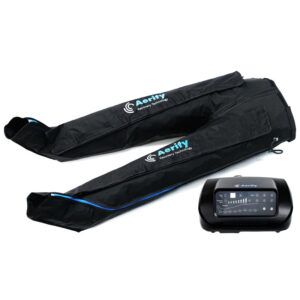
Other recovery tools can be used depending on the situation. A massage roller may help some people manage calf muscle tension, while pneumatic compression systems can provide a different form of compression for the entire leg.
For more information about pneumatic compression, read Lymphatic Drainage Boots at Home – Who Are They Suitable For?
After a particularly demanding leg session, aggressive massage is not always necessary or comfortable. Recovery methods should be chosen according to your symptoms, training load and personal preference rather than assuming that more treatment always produces better recovery.
Are compression socks after exercise worth it?
If your legs regularly feel heavy, tired or mildly swollen after work, running or other physical activity, compression socks can be a simple and practical option to try.
They require little preparation, can be worn while performing normal daily activities and may improve comfort for some people after demanding days or training sessions.
At the same time, compression socks are not essential for everyone. If your training load is appropriate, recovery is good and you have no significant leg discomfort, there may be little reason to use them routinely.
The important point is to select a product according to your actual needs rather than simply choosing the strongest or most popular option. Correct sizing, appropriate compression and realistic expectations are more important than marketing claims.
When compression socks are well fitted and used for the right reason, they can be a useful addition to a broader recovery routine – helping the legs feel more comfortable without pretending to replace the fundamentals of recovery.
Related articles
📖 Compression boots – how they work, their main benefits and how to choose a model
📖 When to use compression boots – before or after training?
📖 How do professional futsal players recover between matches? A look behind the scenes of the UEFA Futsal Champions League
Does everyone need compression socks after exercise?

Aigars Caune
Physiotherapist
Not necessarily. If your legs feel tired, heavy or mildly swollen after training or a long day on your feet, compression socks may improve comfort and support venous return. However, they do not replace adequate rest, appropriate training-load management, hydration or nutrition. If pain or swelling repeatedly returns, becomes pronounced or predominantly affects one leg, medical assessment is recommended.
Recommended compression products


Orthosis and compression clothing

Orthosis and compression clothing
More articles about orthoses
Looking for more information about orthoses and supportive products? Explore our orthosis guide, where you will find practical articles about knee, ankle, wrist and other orthoses, their selection and use.
View the orthosis guide